

Think of a question
Choose a simple, low-stakes question that can be answered with yes or no.
Ask a yes or no question,
spin the wheel, and get a quick,
random answer to help you decide.
Try an example:
Four simple steps
Use the wheel as a playful nudge when you are overthinking a small choice. It gives a random answer—not a prediction—and your reaction is often the most useful part.
Choose a simple, low-stakes question that can be answered with yes or no.
Press Spin and let the wheel make a fresh, random choice for you.
The wheel lands on YES or NO. Each spin has an equal chance of either result.
Notice your first reaction. Relief or disappointment can reveal what you wanted.
A random tool, not a fortune teller. Use the result for harmless choices. For important decisions, rely on good information, careful judgment, and qualified advice.
Everyday inspiration
The wheel works best when the stakes are low, both answers are acceptable, and you simply need a little momentum.
Useful when two choices feel equally good and you are stuck replaying the same pros and cons.
Perfect for harmless daily decisions where either answer would be completely okay.
Turn a classroom, party, family night, or friendly challenge into a playful shared moment.
If YES makes you smile—or NO disappoints you—that feeling may reveal your real preference.
Need an idea?
Choose a question below to place it in the wheel, then spin for a quick answer.
Quick choices for ordinary moments.
Low-pressure prompts for social situations.
Small nudges when motivation is the hard part.
Explore the toolbox
A yes or no answer is not always enough. Try a tool designed for names, multiple options, or choices with different probabilities.
Best when you have several choices and want to create a wheel that is completely your own.
Example: pizza, tacos, pasta, or sushi
Create a wheelChoose a person fairly from a class, team, giveaway, or group of friends.
Example: pick the next presenter
Pick a nameGive some options a greater chance while still keeping the final choice random.
Example: 60% walk, 30% movie, 10% nap
Try weighted choicesA friendly reminder
Random answers are great for playful choices. Some decisions deserve more time, facts, and care.
Questions, answered
Learn how the Yes or No Wheel chooses an answer, what it remembers, and when a random result is—or is not—the right tool.
A Yes or No Wheel is a simple random spinner that chooses between YES and NO. It is designed for quick, harmless decisions when both answers would be acceptable.
You can type a question or keep it in your head, spin once, and use the result as a playful nudge. The wheel does not predict the future or decide what is best for you.
Yes. Every spin uses a secure random value generated by your browser. The answer is selected independently, so earlier results do not change the probability of the next spin.
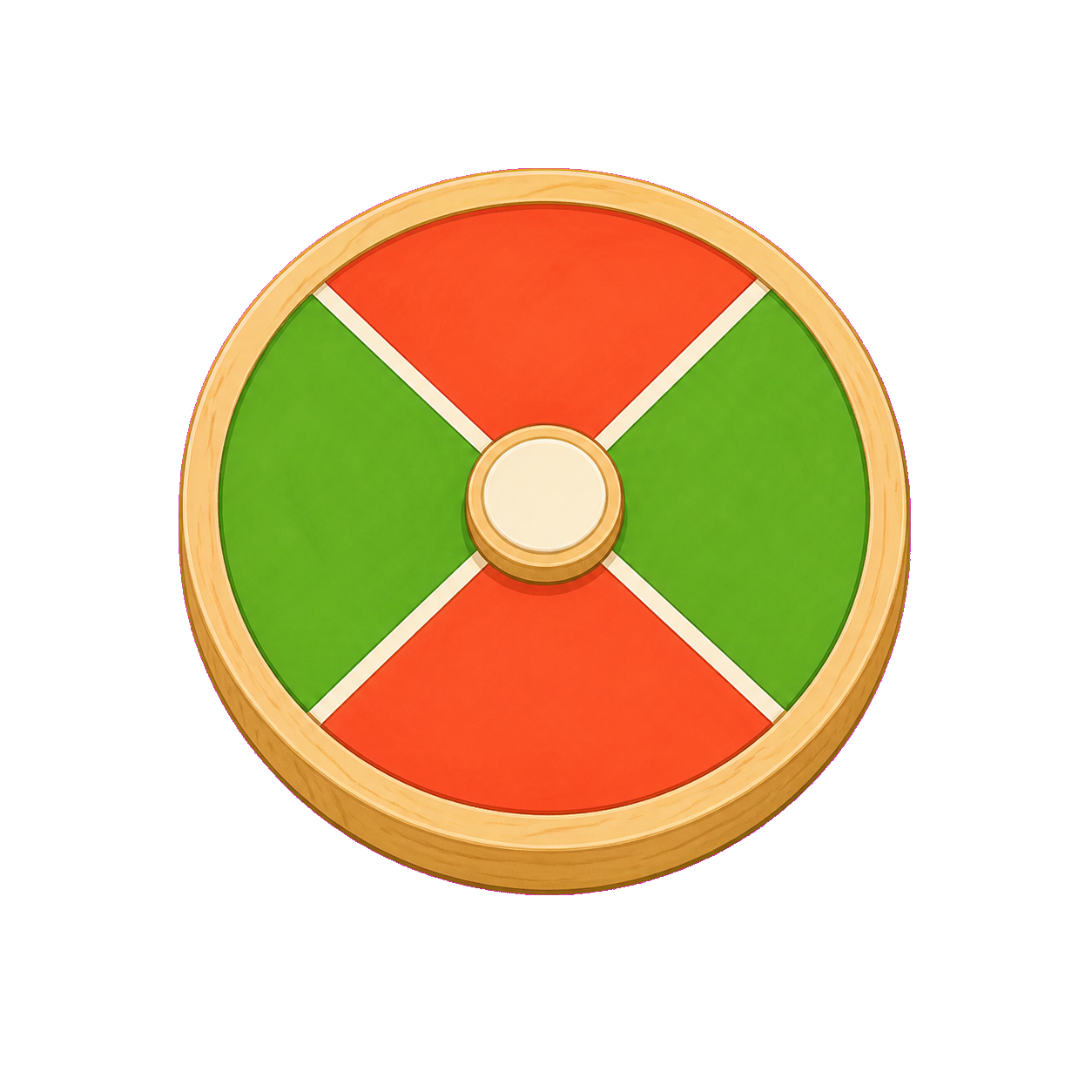
The wheel contains an equal number of YES and NO sections. That gives both answers the same chance each time you spin.
Yes. Typing is optional. You can think of a private question, press Spin, and read the result without sharing the question with the site.
Entering a question can still be useful because it helps you make the choice specific. Try to phrase it so YES and NO are both clear outcomes.
Recent YES and NO results can be saved locally on your current device. They are used only to show your recent spins and are not sent to an account.
You can clear the history at any time. Browser privacy settings, private browsing, or clearing site data may also remove it.
This wheel keeps YES and NO equally likely so the experience stays simple and fair. The four visible sections contain two YES answers and two NO answers.
If you need different probabilities or more than two choices, use the Weighted Wheel or Custom Wheel from the toolbox.
It works well for everyday “Should I?” questions such as whether to order takeout, watch a movie, send a casual message, or take a break.
Treat the answer as a prompt to notice your reaction. If you immediately want to spin again, that may be a sign that you already preferred the other result.
You can spin as many times as you like, and every spin is independent. For a genuine tie-breaker, spinning once usually gives the clearest experience.
Repeatedly spinning until a preferred answer appears is also useful information: it often reveals which answer you were hoping to see.
No. Do not use a random wheel as a substitute for reliable information, careful judgment, or professional advice. Medical, legal, financial, safety, and high-impact personal decisions deserve more care.
The wheel is best for entertainment and low-stakes choices where either outcome is safe and acceptable.
Practical guides
Walk through the active list, random value, selected result, and final landing angle.
Read guideLearn why a fair 50/50 wheel can produce several YES or NO results in a row.
Read guideSee how browser randomness, selection boundaries, and the landing animation fit together.
Read guideAsk one clear question, spin once, and notice how the answer feels.